
ABOUT
PHILOSOPHY
At NAHBI-H, we decided to be one of those who CHANGE THE WORLD …….. and we’ve adopted a simple and clear philosophy for our work: any study or project we undertake must be built upon the spirit of a unique, reliable and evolutionary work, aligned with the circumstances of everyone. NABNI-H is not only a tool of business, but also a philosophy of life.
Art, Architecture and Heritage preservation are interrelated and can lead to building a better world – one that is more human, peaceful and joyful … We ask: Is building the future insulated from history? We answer: evidently not. And we weave the stories of time together using notions of inspiration, creativity, authenticity, contemporaneity and many others.
We believe everyone must be able to express his / her convictions and define them under a human umbrella, in the framework of a shared and constructive vision which is limitless.
But knowledge and technology alone are not enough anymore…… At NABNI-H we strive to take our work to another level of life: a transcendent state, a spiritual and mystical one. Certainly, this is a long ride with delicate obstacles. Nevertheless, the ambitions and challenges are always exciting.

FOUNDATIONS
Following long years of education and training around the world, we founded a firm to tackle these ambitious goals in the City of Lights in France in February 2017 and in the city of Science and Business, Boston, MA, USA in February 2022. Our name expresses what we are looking for: NABNI in Arabic means WE BUILD. As for [H], it signifies HUMANITY……
So, WE STRIVE TO PARTICIPATE IN BUILDING A HUMAN WORLD…… a huge undertaking in both our personal and professional lives.
Through our own expertise combined with that of a network of renown international collaborators, our services includes consulting studies in but not only:
Conservation, adaptive intervention and revitalization of historic towns.
Governance and public policy in historic towns,
Strategies of Post-conflict / Post-disaster recovery of historic towns.
Housing,
Teaching history of art and historic conservation,
AI in Heritage conservation.
Our US chapter (NABNI-H US) was founded with a more specific purpose – to focus on the conservation and re-development of post-war Syria (the home country of NABNI-H’s founder, Anas Soufan). At the core of our work is the development of the Ancient Aleppo Recovery Master Plan, AARMP, in partnership with several Syrian public authorities, Syrian civil society organizations, as well as international agencies and organizations.
ANAS SOUFAN, Founder

Anas SOUFAN
Founder
Anas builds his vision of the world through art, history, and the daily life of people. An artist and architect specializing in public policy and the management of historic towns, drawing on his multicultural background and academic training in history, art history, historic conservation, and architectural design in Syria, France, Switzerland, and the United States, he has taught at universities across the Middle East, France, and the U.S. He has also published, reviewed, translated, and edited books, reports, and articles in several languages.
Anas’ artistic and architectural activities were officially launched in 2000 when he enrolled in the Order of Engineers and Architects in Syria. At the same time, he joined two leading offices of urban and architectural studies in Damascus and got his teaching position in the Faculty of Architecture of Damascus. In 2004, a new page opened when he arrived to Paris to work on his Ph.D in History of Art. In 2010, Anas joined La Maison des Artistes de Paris and in 2017, he founded his own company NABNI-H and its American branch NABNI-H US. in 2022. Through this special professional structure combining art, history, and design, NABNI-H US offers a wide range of services including but not only the interior and exterior design, urban planning, cultural heritage management.
Anas is currently a Visiting Assistant Professor at SOAD–WIT and an Associate Researcher at the CMES at Harvard University. Over the years, he has served as an advisor, consultant, and specialist expert for international organizations, including UNESCO, ICOMOS, ARC-WH, AUDI, the Aga Khan (organizations), and others. Anas is also the founder of NABNI-H US, a private Art, Architecture, and Historic Conservation firm based in Boston and Paris.
Anas current practice focuses on the urban revitalization of historic towns in fragile contexts, including shrinking cities and post-conflict contexts. In this capacity, Anas is contributing to the Ancient Aleppo Recovery Master Plan in Aleppo, Syria, and the Saint Vincent District Revitalization Plan in Laon, France. By focusing on the linkages between urban and architectural design and broader ethical, economic, and sociopolitical transformations, Anas advocates for a new eclectic and multivocal approach — a “Participative Scope of Change” — grounded in compromising and innovative partnerships gathering local communities, public authorities, civil society organizations, and concerned international institutions.
ANNE-CATRIN SCHULTS, Principal
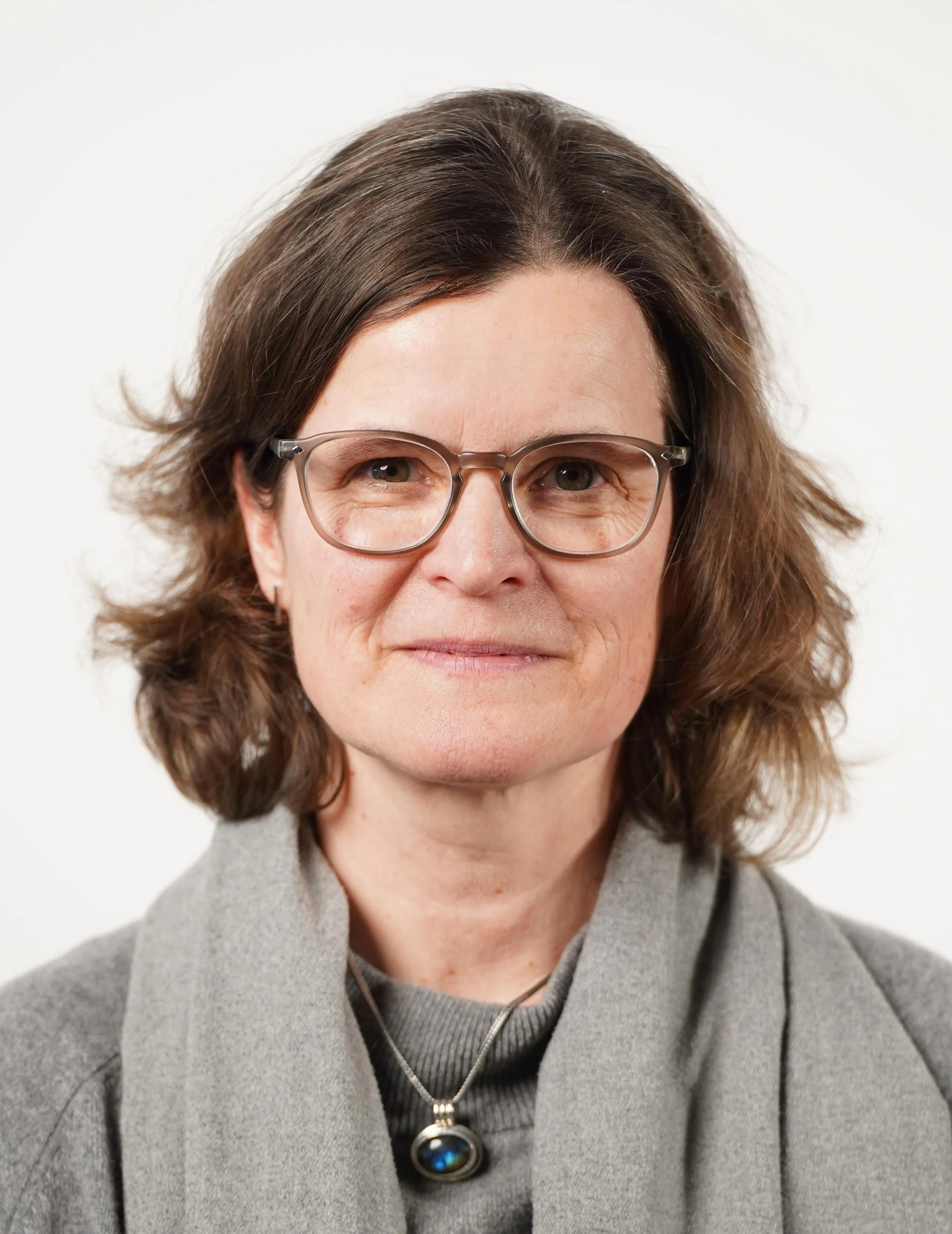
Anne-Catrin SCHULTS
Principal
Anne-Catrin Schultz is an educator, author, and licensed architect whose work focuses on historic and contemporary architectural tectonics, with expertise in preservation, restoration, and reconstruction as critical design practices. Her research explores the intersection of adaptive interventions, material authenticity, and cultural identity, framing preservation as an active, design-driven process that engages the layered evolution of the built environment. Her scholarship examines how culture, technology, and politics shape architectural production and transformation over time. Central to her work is the study of Italian architect Carlo Scarpa, whose approach to restoration informs her research on layering as both a design strategy and a preservation methodology. Schultz understands restoration as a dynamic process that negotiates continuity and change, engaging questions of authenticity, authorship, and reconstruction. Her publications—including Carlo Scarpa–Layers (2007), Time, Space and Material–The Mechanics of Layering in Architecture (2015), and Real and Fake in Architecture – Close to the Original, Far from Authentic? (2020)—Investigate the complexities of preservation, replication, and intervention in historic contexts.
Her professional practice includes work with Skidmore, Owings & Merrill (SOM) and Turnbull, Griffin and Haesloop in San Francisco, as well as independent practice in Oakland, where she led preservation and restoration projects in the Bay Area, including award-winning work at the Wheeler House and the Berkeley City Club. Her approach integrates technical expertise with cultural and participatory frameworks, aligning preservation with sustainability and adaptive reuse and linking the past to the present. Anne-Catrin studied preservation in Italy and architecture and urbanism in Germany, earning her Ph.D. from the University of Stuttgart. She has served on the editorial board of Technology | Architecture + Design (TAD) and as a member of the council and management board of the International Association for Structures and Architecture (IASA). She is currently a Professor at the Wentworth Institute of Technology in Boston.

Samah Zeitouni
Architect - Specialist
Architect Samah Zeitouni is an Aleppo-based professional specializing in Building Information Modeling (BIM) alongside architectural and cultural heritage conservation. Samah holds a Master's degree from the Syrian Virtual University, dedicating her postgraduate studies to the protection of historical monuments. Her thesis directly focused on adopting the Heritage Building Information Modeling (HBIM) system as a foundation for preserving Aleppo's rich architectural heritage. She practically applied this research by utilizing the historical "Al-Ajami Kitchen" building as a comprehensive case study within her dissertation.
Professionally, she worked at the Technical Services Directorate in Aleppo, conducting field trips to inspect and assess damaged buildings requiring rehabilitation. She actively contributed to drawing architectural plans and performing quantity surveying for damaged structures to facilitate their study and restoration. Alongside her fieldwork, she shared her expertise as an academic lecturer at Aleppo University, where her teaching scope included architectural design, public works, and historic and vernacular architecture in Syria, demonstrating a strong ability to integrate advanced digital tools with heritage projects, effectively supporting technical and engineering decision-making. Furthermore, Samah enhanced her spatial documentation skills by completing a specialized QGIS course at the German Archaeological Institute. Hence, her career excellently combines architectural design, governmental work skills, academic teaching, and BIM modeling to serve the essential goal of protecting and maintaining urban heritage. Samah started her position as Architect-Specialist in Historic Conservation at NABNI-H US in March 2025.